
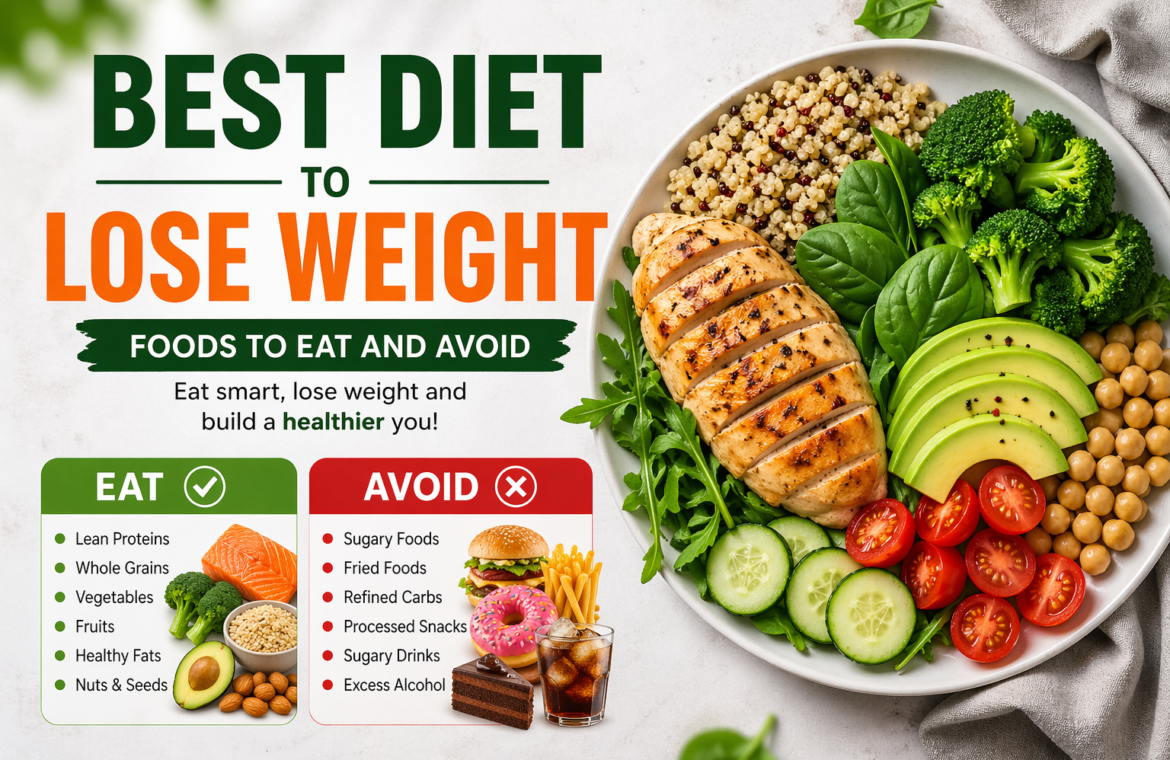
Losing weight is not about starving yourself or following extreme trends. The reality is much simpler and far more sustainable: the best diet to lose weight is one that you can follow consistently, that nourishes your body, and that creates a healthy calorie deficit without harming your metabolism.
In this article, we will break down exactly what the best diet to lose weight looks like, which foods you should include, which ones to avoid, and how to build habits that actually last. This is written in a natural, easy-to-read way so you can understand and apply it in real life.
What Is the Best Diet to Lose Weight?
The best diet to lose weight is not a specific brand or a strict meal plan. It is a balanced eating approach that focuses on:
- Whole, nutrient-dense foods
- Proper portion control
- High protein intake
- Controlled carbohydrates
- Healthy fats
- Consistency over perfection
Weight loss happens when you burn more calories than you consume. However, the quality of your calories matters just as much as the quantity. Eating 1500 calories of junk food will not give the same results as eating 1500 calories of clean, whole foods.
A good diet should also support your energy levels, digestion, hormones, and mental clarity.
Why Most Diets Fail
Before we dive into foods, it is important to understand why many people struggle with weight loss.
Most diets fail because they are:
- Too restrictive
- Not enjoyable
- Difficult to maintain long term
- Missing essential nutrients
- Focused only on short-term results
People often follow extreme plans for a few weeks, lose some weight, and then regain it. The best diet to lose weight is one that becomes part of your lifestyle, not something temporary.
Key Principles of the Best Diet to Lose Weight
1. Calorie Deficit Without Starvation
You need to eat fewer calories than your body burns, but not too few. Extreme calorie cutting slows your metabolism and leads to muscle loss.
2. High Protein Intake
Protein helps you feel full, reduces cravings, and preserves muscle mass. It also slightly increases your metabolism.
3. Balanced Macronutrients
Your body needs carbohydrates, fats, and protein in the right balance. Eliminating entire food groups is rarely necessary.
4. Whole Foods Over Processed Foods
The closer a food is to its natural state, the better it is for weight loss.
5. Hydration
Drinking enough water supports digestion, reduces hunger, and improves overall health.
Foods to Eat for Weight Loss
Lean Protein Sources
Protein is the foundation of the best diet to lose weight. It helps control hunger and keeps you satisfied for longer periods.
Good options include:
- Chicken breast
- Fish (salmon, tuna)
- Eggs
- Greek yogurt
- Lentils and beans
- Tofu and paneer
Try to include protein in every meal. This reduces overeating and stabilizes blood sugar levels.
Vegetables (Low-Calorie, High Volume)
Vegetables are extremely important because they are low in calories but high in fiber and nutrients.
Best choices:
- Spinach
- Broccoli
- Cauliflower
- Carrots
- Cucumbers
- Bell peppers
You can eat large portions without consuming too many calories, which makes them ideal for weight loss.
Fruits (Natural Sweetness)
Fruits can satisfy your sweet cravings in a healthy way.
Best fruits for weight loss:
- Apples
- Berries
- Oranges
- Pears
- Watermelon
They provide vitamins, antioxidants, and fiber. However, portion control is still important because fruits contain natural sugars.
Whole Grains
Carbohydrates are not your enemy. Choosing the right type of carbs is what matters.
Healthy options include:
- Brown rice
- Oats
- Quinoa
- Whole wheat bread
- Barley
These foods provide sustained energy and prevent sudden spikes in blood sugar.
Healthy Fats
Fats are essential for hormone function and satiety.
Include:
- Avocados
- Nuts (almonds, walnuts)
- Seeds (chia, flax)
- Olive oil
Even though fats are calorie-dense, they help you feel full and reduce overeating.
Dairy or Alternatives
Dairy can be part of the best diet to lose weight when consumed in moderation.
Options:
- Low-fat milk
- Yogurt
- Cottage cheese
These provide calcium and protein, which support overall health.
Foods to Avoid for Weight Loss
Sugary Foods and Drinks
Sugar is one of the biggest obstacles to weight loss.
Avoid:
- Soda and soft drinks
- Packaged juices
- Cakes and pastries
- Candy and chocolates
These foods are high in calories but low in nutrients and do not keep you full.
Refined Carbohydrates
Refined carbs digest quickly and cause blood sugar spikes.
Limit:
- White bread
- White rice
- Pasta made from refined flour
- Bakery products
These foods often lead to increased hunger and fat storage.
Fried and Fast Foods
Fast foods are high in unhealthy fats and calories.
Avoid:
- French fries
- Burgers
- Fried chicken
- Processed snacks
They are designed to be addictive and can easily lead to overeating.
Processed Foods
Highly processed foods contain preservatives, additives, and hidden sugars.
Examples:
- Packaged snacks
- Instant noodles
- Frozen meals
- Processed meats
These foods are low in nutritional value and high in empty calories.
Excess Alcohol
Alcohol adds extra calories and slows down fat burning.
Regular consumption can:
- Increase appetite
- Disrupt metabolism
- Lead to poor food choices
Reducing alcohol intake can significantly improve weight loss results.
Sample Daily Diet Plan
Here is a simple example of what the best diet to lose weight might look like in a day.
Breakfast
Oats with fruits and a boiled egg
Mid-Morning Snack
Apple or a handful of nuts
Lunch
Grilled chicken or lentils with brown rice and vegetables
Evening Snack
Green tea with roasted chickpeas
Dinner
Light meal with vegetables and protein (fish, paneer, or tofu)
This kind of balanced approach keeps you full and energized throughout the day.
Importance of Portion Control
Even healthy foods can cause weight gain if eaten in large amounts.
Simple tips:
- Use smaller plates
- Avoid eating directly from packages
- Stop eating when you feel 80% full
- Be mindful while eating
Portion control is one of the most underrated aspects of weight loss.
Role of Exercise in Weight Loss
Diet plays the biggest role, but exercise enhances your results.
Best activities:
- Walking
- Strength training
- Cycling
- Swimming
Exercise helps burn calories, build muscle, and improve metabolism. Combining diet and exercise gives the best results.
Common Mistakes to Avoid
Skipping Meals
Skipping meals often leads to overeating later.
Following Fad Diets
Trendy diets may promise quick results but are rarely sustainable.
Not Eating Enough Protein
Low protein intake can lead to muscle loss and increased hunger.
Ignoring Sleep
Poor sleep affects hormones that control hunger and cravings.
Being Inconsistent
Consistency matters more than perfection. Small, steady changes lead to long-term success.
How to Stay Consistent
Consistency is what makes the best diet to lose weight effective.
Practical tips:
- Plan your meals in advance
- Keep healthy snacks available
- Avoid keeping junk food at home
- Track your progress
- Be patient with results
Weight loss is not instant. It is a gradual process that requires discipline and persistence.
Mental Approach to Weight Loss
Your mindset plays a huge role in your success.
Instead of thinking:
“I need to lose weight quickly”
Think:
“I am building a healthier lifestyle”
This shift helps you stay motivated and reduces stress.
Final Thoughts
The best diet to lose weight is not about restriction or suffering. It is about making smarter food choices, maintaining a calorie deficit, and staying consistent over time.
Focus on:
- Eating whole, natural foods
- Avoiding processed and sugary items
- Including protein in every meal
- Controlling portions
- Staying active
There is no perfect diet, but there is a perfect approach for you. Start small, stay consistent, and results will follow.
Weight loss is a journey, not a race. The goal is not just to lose weight, but to build habits that keep you healthy for life.