
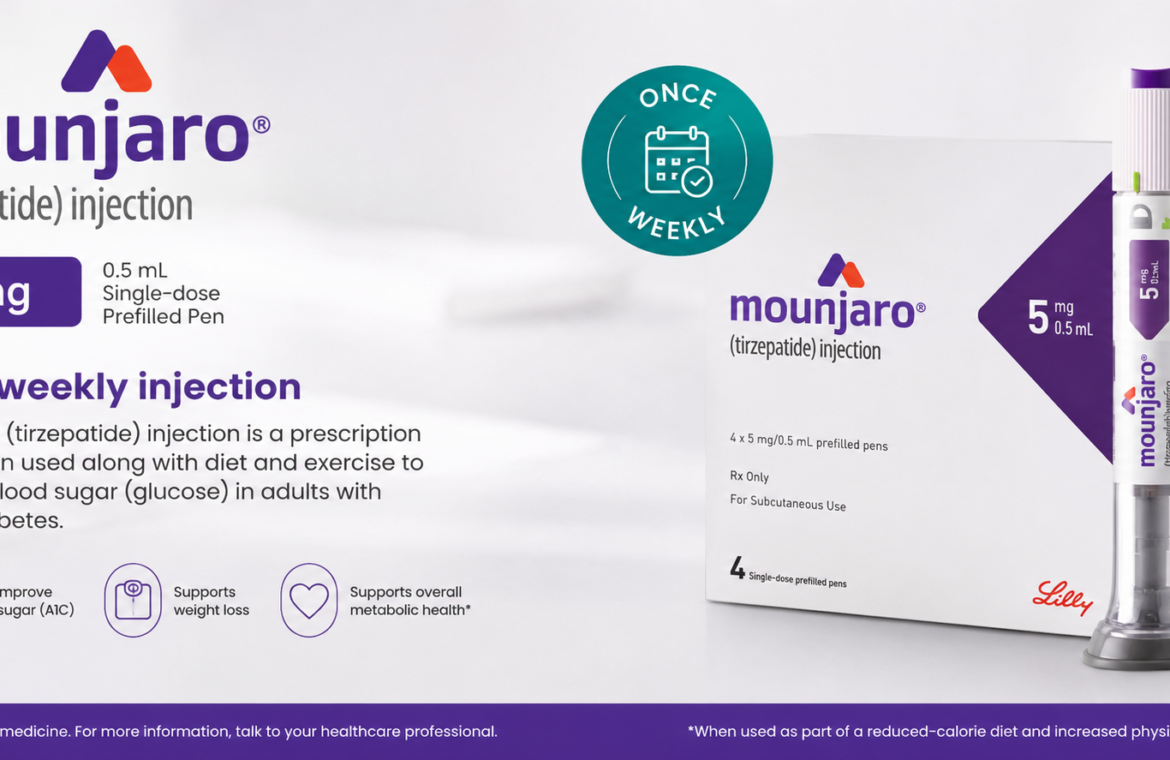
If you or someone you care about has been prescribed Mounjaro 5 mg, you probably have a lot of questions. What does it actually do inside your body? What are the side effects you should prepare for? And how much is this going to cost you every month? These are completely fair questions, and this guide is here to answer all of them in plain, straightforward language.
Mounjaro has become one of the most talked-about injectable medications in the United States over the past couple of years. It was originally approved by the FDA for type 2 diabetes management, but its effects on body weight have drawn enormous attention from both patients and physicians. The 5 mg dose is a key step in the treatment process, and understanding it fully can make your experience with the medication far more manageable.
What Is Mounjaro 5 mg?
Mounjaro is the brand name for a drug called tirzepatide, made by Eli Lilly and Company. It comes in a pre-filled, single-use injection pen that you inject under your skin once a week. The medication belongs to a class of drugs that work on two specific hormone receptors in your body — GIP and GLP-1 — which is what makes it different from older diabetes medications.
The 5 mg dose is not the starting point. Most doctors begin patients on 2.5 mg for the first four weeks to help the body adjust. After that, the dose is moved up to 5 mg, where many patients stay for a while before potentially going higher. Think of it as a middle step — still relatively low, but starting to show real results.
How Does Mounjaro 5 mg Work?
This is where things get interesting. Most people have heard of GLP-1 receptor agonists — drugs like semaglutide that work on one hormone pathway. Mounjaro 5 mg goes a step further by targeting two pathways at the same time.
The GIP Pathway
GIP stands for glucose-dependent insulinotropic polypeptide. When you eat, your intestines naturally release GIP, which tells your pancreas to produce insulin. Tirzepatide mimics this signal, helping your body release insulin only when your blood sugar actually goes up — not randomly. This reduces the risk of your blood sugar dropping too low.
The GLP-1 Pathway
GLP-1, or glucagon-like peptide-1, is another gut hormone that plays a key role in appetite regulation. When tirzepatide activates GLP-1 receptors, a few things happen: your stomach slows down how fast it empties food, your brain receives stronger signals that you are full, and your liver produces less glucose. The result is lower blood sugar and, for most people, noticeably less hunger.
Together, these two mechanisms make Mounjaro 5 mg one of the more powerful tools currently available for managing type 2 diabetes. The combination also appears to be responsible for the significant weight loss many users report.
Who Is Mounjaro 5 mg Prescribed For?
Mounjaro 5 mg is FDA-approved for adults with type 2 diabetes to help improve blood sugar control, used alongside diet and exercise. It is not approved for type 1 diabetes. Some physicians prescribe it off-label for weight management, though Zepbound (also tirzepatide, same drug) is the version formally approved specifically for that purpose.
Your doctor may recommend Mounjaro 5 mg if:
- You have been diagnosed with type 2 diabetes and your blood sugar is not well-controlled with other oral medications alone.
- You need a once-weekly injectable option that fits better into your lifestyle.
- You have cardiovascular risk factors that your doctor wants to address alongside blood sugar management.
- You have already tried the 2.5 mg starting dose for four weeks and are ready to move to the next step.
Mounjaro 5 mg Side Effects: What to Expect
Let’s be honest — side effects are the part most people are most worried about. The good news is that many people tolerate Mounjaro 5 mg reasonably well. The not-so-good news is that gastrointestinal issues are genuinely common, especially in the early weeks. Here is a realistic breakdown.
Common Side Effects
These are the ones that show up most frequently, particularly during the first few weeks after starting or increasing your dose:
- Nausea — the most reported side effect. It often improves after the first few weeks.
- Diarrhea — loose stools are common, especially early on.
- Vomiting — less frequent than nausea, but it happens for some people.
- Reduced appetite — technically a desired effect for many, but it can feel uncomfortable.
- Constipation — some people experience the opposite of diarrhea.
- Stomach pain or discomfort — usually mild and temporary.
- Injection site reactions — redness, itching, or minor swelling where you inject.
Less Common but Notable Side Effects
- Low blood sugar (hypoglycemia) — more likely if you are also taking insulin or sulfonylureas.
- Fatigue — some patients feel tired, especially during the first few weeks.
- Dizziness — occasionally reported, often linked to nausea.
- Heartburn or acid reflux — due to slower stomach emptying.
- Hair loss — reported by some users, likely related to rapid weight loss rather than the drug itself.
Serious Side Effects (Rare but Important)
These are uncommon but you should know about them. Contact your doctor right away if you experience any of the following:
- Severe abdominal pain that spreads to your back (possible pancreatitis).
- Vision changes or eye problems (diabetic retinopathy can worsen).
- Kidney problems — dehydration from vomiting or diarrhea can strain the kidneys.
- Gallbladder problems including gallstones.
- Serious allergic reactions — rash, swelling, difficulty breathing.
- Thyroid tumors — noted in animal studies; the human risk is not yet fully established, but people with a personal or family history of medullary thyroid carcinoma should not use this medication.
Always read the full prescribing information and talk to your doctor or pharmacist if you notice anything that concerns you.
How to Use Mounjaro 5 mg
Mounjaro 5 mg comes in a single-use injection pen. You inject it once a week, on the same day each week if possible. The injection goes under the skin (subcutaneously) — common spots include the abdomen, upper thigh, or upper arm. You rotate sites to avoid irritating the same spot repeatedly.
You can take it with or without food. If you miss a dose and it has been fewer than 4 days since your scheduled injection day, go ahead and take it. If more than 4 days have passed, skip that dose and resume your normal weekly schedule. Never double up on doses.
Store the pens in the refrigerator between 36°F and 46°F (2°C to 8°C). They can also be kept at room temperature for up to 21 days if needed. Keep them away from direct heat or light, and never freeze them.
Mounjaro 5 mg Price in the United States
Cost is one of the biggest concerns people have about Mounjaro, and understandably so. Without insurance, a monthly supply of Mounjaro (four pens) can range from approximately $900 to over $1,000 at most US pharmacies. The exact price can vary depending on the pharmacy and any discounts applied.
With Insurance
If you have private health insurance and your plan covers Mounjaro, your out-of-pocket cost could be significantly lower — often just a co-pay. Coverage varies widely by plan. Many commercial insurance plans cover Mounjaro for type 2 diabetes with a valid prescription, but some require prior authorization. Medicare and Medicaid coverage is more limited and depends on your specific plan and state.
Savings Card from Eli Lilly
Eli Lilly offers a savings card program for eligible commercially insured patients. With the savings card, some patients pay as little as $25 per month. However, this program is typically not available to those on government insurance programs like Medicare or Medicaid. It is worth checking the official Mounjaro website for the most current savings program information, as eligibility criteria can change.
Patient Assistance Programs
If you are uninsured or underinsured and cannot afford Mounjaro, Eli Lilly has a patient assistance program called Lilly Insulin Value Program. Your doctor’s office can also help you navigate assistance options. Nonprofit organizations and prescription discount services like GoodRx may also help reduce your costs at certain pharmacies.
Tips to Manage Side Effects at the 5 mg Dose
Nausea and digestive discomfort are the most common complaints when moving to the 5 mg dose. Here are some practical things that genuinely help:
- Eat smaller meals and eat slowly. Large meals can overwhelm a stomach that is already emptying more slowly.
- Avoid greasy, fatty, or very spicy foods while your body is adjusting.
- Stay well hydrated. Dehydration makes nausea worse.
- Inject on a day when you can rest if needed, especially in the first few weeks.
- Avoid lying down immediately after eating.
- Give it time. Most people find that nausea improves significantly after the first month at a new dose.
What Kind of Results Can You Expect at 5 mg?
At the 5 mg dose, many people begin to see meaningful improvements in their blood sugar numbers, particularly their fasting glucose and A1C. Clinical trial data has shown that tirzepatide is among the most effective agents currently available for lowering A1C in type 2 diabetes.
Weight loss at 5 mg is also notable. In clinical trials, patients on tirzepatide experienced substantial reductions in body weight compared to placebo and even compared to other injectable diabetes medications. Results vary from person to person, and the full effect builds over time as the medication accumulates in your system.
Keep in mind that Mounjaro works best when combined with healthy eating habits and regular physical activity. It is a powerful tool, but it is not a standalone solution.
Who Should Not Take Mounjaro 5 mg?
This medication is not right for everyone. Do not use Mounjaro 5 mg if:
- You or a family member has a history of medullary thyroid carcinoma (a type of thyroid cancer).
- You have Multiple Endocrine Neoplasia syndrome type 2 (MEN 2).
- You have had a serious allergic reaction to tirzepatide or any ingredient in the pen.
- You have type 1 diabetes.
- You are pregnant or planning to become pregnant — stop Mounjaro at least two months before attempting pregnancy.
- You are breastfeeding.
Always disclose your full medical history and all medications you are currently taking to your prescribing physician before starting.
Frequently Asked Questions About Mounjaro 5 mg
How long does it take for Mounjaro 5 mg to work?
Most people start noticing some reduction in appetite within the first few weeks. Blood sugar improvements can often be measured after a few weeks as well. Significant weight changes typically become more apparent after two to three months of consistent use.
Is 5 mg the maximum dose?
No. The dose escalation schedule goes 2.5 mg, 5 mg, 7.5 mg, 10 mg, 12.5 mg, and up to 15 mg. Many patients stay at 5 mg or 7.5 mg for extended periods. Higher doses are not always better — your doctor will guide the schedule based on your response and tolerance.
Can I switch the day I inject?
Yes, you can change your injection day as long as your last dose was at least 3 days before the new scheduled day. After that, continue on the new weekly schedule.
Does Mounjaro 5 mg cause hair loss?
Some users report hair thinning or shedding. This is generally believed to be a response to rapid weight loss rather than a direct drug effect. It typically resolves on its own. If it concerns you, mention it to your doctor.
Will I need to take Mounjaro forever?
Type 2 diabetes is a chronic condition, and most people who respond well to Mounjaro continue it long-term. Studies have shown that stopping tirzepatide results in blood sugar rising again and weight returning. This is not a sign of failure — it simply reflects that the medication is actively managing your condition.
Final Thoughts
Mounjaro 5 mg sits at an important point in the treatment journey — past the cautious starting dose, but still manageable for most people in terms of side effects. Its dual-action mechanism makes it genuinely effective at lowering blood sugar and, for many people, supporting significant weight loss in the process.
Yes, the cost is real and the side effects require some adjustment. But for many patients with type 2 diabetes, Mounjaro 5 mg represents a meaningful step forward in managing a condition that affects nearly every part of daily life. The key is to go into it informed, work closely with your healthcare provider, and give your body the time it needs to adapt.
As always, this article is for informational purposes only. It is not a substitute for professional medical advice, diagnosis, or treatment. Talk to your doctor or pharmacist about whether Mounjaro 5 mg is the right choice for your specific health situation.
Medical Disclaimer
This content is intended for general informational purposes only and does not constitute medical advice. Always consult a qualified healthcare professional before starting, stopping, or changing any medication. Individual results and experiences may vary.