
Introduction
In recent years, sugar substitutes have gained immense popularity as people look for healthier ways to satisfy their sweet cravings. Among these alternatives, erythritol has emerged as a widely used sweetener, especially in “sugar-free” and “low-carb” products. Marketed as a natural and safe option, it has been embraced by individuals managing diabetes, obesity, and overall calorie intake.
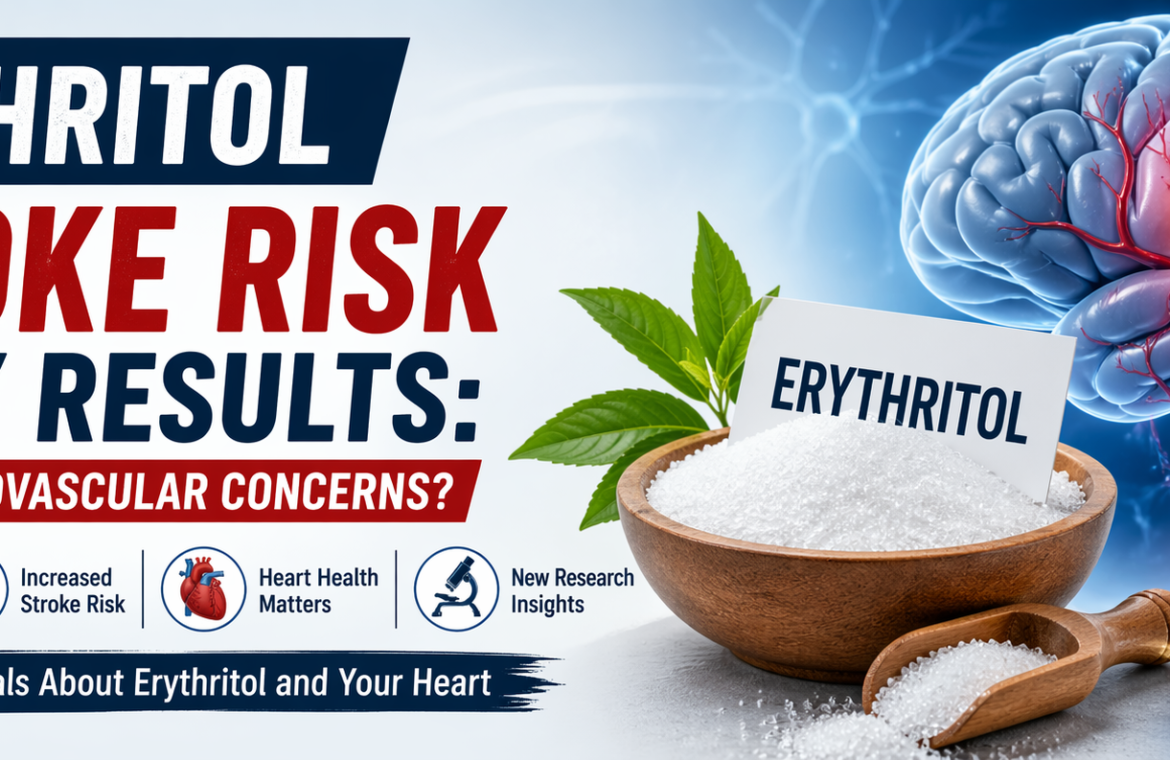
However, growing scientific evidence is beginning to challenge this perception. The Erythritol Stroke Risk Study has sparked serious discussions within the medical and nutrition communities. Researchers are now questioning whether this seemingly harmless sugar alcohol could have unintended effects on cardiovascular health.
This article explores the findings of the Erythritol Stroke Risk Study in depth, examining what the research reveals, why it matters, and what it could mean for your long-term health.
What Is Erythritol?
Erythritol is a type of sugar alcohol (polyol) naturally found in small amounts in fruits like grapes and pears, as well as in fermented foods. Commercially, it is produced through fermentation of glucose using yeast or fungi.
Unlike traditional sugar, erythritol contains almost zero calories and does not significantly raise blood sugar or insulin levels. This makes it particularly attractive for:
- People with diabetes
- Individuals following ketogenic or low-carb diets
- Those aiming to reduce calorie intake
Its mild sweetness—about 60–70% as sweet as sugar—and minimal aftertaste have contributed to its widespread use in beverages, baked goods, protein bars, and sugar-free snacks.
Why Was the Erythritol Stroke Risk Study Conducted?
Despite erythritol’s popularity, long-term safety data has been relatively limited. Most earlier studies focused on short-term metabolic effects rather than cardiovascular outcomes.
The motivation behind the Erythritol Stroke Risk Study was to investigate whether there is any association between erythritol levels in the body and major cardiovascular events such as:
- Stroke
- Heart attack
- Blood clot formation
Researchers were particularly interested in understanding whether erythritol might influence blood clotting mechanisms, a key factor in cardiovascular disease.
Key Findings of the Erythritol Stroke Risk Study
Elevated Blood Erythritol Levels and Risk
One of the most striking findings was that individuals with higher circulating levels of erythritol in their blood had a significantly increased risk of cardiovascular events, including stroke.
The study observed that participants with the highest erythritol levels were more likely to experience:
- Ischemic stroke
- Myocardial infarction (heart attack)
- Cardiovascular-related death
This association remained even after adjusting for traditional risk factors such as age, diabetes, and hypertension.
Impact on Blood Clot Formation
A critical discovery from the Erythritol Stroke Risk Study was its effect on platelets—the cells responsible for blood clotting.
Researchers found that erythritol may enhance platelet reactivity. In simpler terms, it can make blood platelets more likely to stick together and form clots. While clotting is essential to stop bleeding, excessive clotting can block blood vessels and lead to:
- Stroke (when blood flow to the brain is blocked)
- Heart attack (when blood flow to the heart is restricted)
Dose-Dependent Effects
Another important aspect highlighted in the study was that even modest consumption of erythritol could raise blood levels significantly. After ingestion, erythritol can remain in the bloodstream for extended periods, potentially prolonging its biological effects.
This raises concerns because people often consume erythritol multiple times a day through various “sugar-free” products.
Understanding the Mechanism: How Could Erythritol Increase Stroke Risk?
Platelet Activation
The leading hypothesis is that erythritol enhances platelet activation. When platelets become overly reactive, they can clump together more easily, increasing the risk of clot formation.
Endothelial Interaction
Some researchers suggest that erythritol might interact with the endothelium—the inner lining of blood vessels—affecting vascular function. Although this area requires further study, any disruption in endothelial health can contribute to cardiovascular disease.
Prolonged Circulation in Blood
Unlike some other sugar substitutes, erythritol is not fully metabolized by the body. A large portion enters the bloodstream and is excreted unchanged in urine. However, during its circulation, it may exert effects on blood components, including platelets.
Who Is Most at Risk?
The findings of the Erythritol Stroke Risk Study do not necessarily mean that everyone who consumes erythritol is at immediate risk. However, certain groups may be more vulnerable:
Individuals with Existing Cardiovascular Conditions
People with a history of:
- Stroke
- Heart disease
- Atherosclerosis
may already have an elevated baseline risk, which could be compounded by increased clotting tendencies.
Diabetic Patients
Ironically, erythritol is heavily marketed toward individuals with diabetes. However, diabetes itself is a risk factor for cardiovascular disease. The combination of underlying risk and potential effects of erythritol could be concerning.
Frequent Consumers of Sugar-Free Products
Those who regularly consume:
- Diet beverages
- Sugar-free desserts
- Low-carb snacks
may accumulate higher levels of erythritol in their bloodstream over time.
Limitations of the Erythritol Stroke Risk Study
While the results are concerning, it is important to interpret them with caution.
Observational Nature
Much of the data is observational, meaning it shows association rather than direct causation. Higher erythritol levels could be linked to other underlying conditions or dietary patterns.
Confounding Factors
Participants with higher erythritol levels may already have metabolic issues, such as obesity or diabetes, which independently increase cardiovascular risk.
Need for Long-Term Clinical Trials
More randomized controlled trials are needed to establish a definitive cause-and-effect relationship between erythritol consumption and stroke risk.
Comparison with Other Artificial Sweeteners
Erythritol is often perceived as safer than other artificial sweeteners like aspartame or sucralose. However, the Erythritol Stroke Risk Study challenges this assumption.
Unlike some artificial sweeteners that primarily affect gut microbiota or metabolism, erythritol appears to have a more direct impact on blood physiology—particularly clotting mechanisms.
This distinction is critical because cardiovascular events such as stroke are often linked to clot formation rather than metabolic disturbances alone.
Practical Implications for Consumers
Moderation Is Key
The findings do not necessarily suggest that erythritol must be completely eliminated, but they do highlight the importance of moderation.
Read Labels Carefully
Erythritol is commonly found in products labeled as:
- “Sugar-free”
- “No added sugar”
- “Keto-friendly”
Consumers should be aware of cumulative intake from multiple sources.
Consider Natural Alternatives
Some individuals may choose to reduce reliance on sugar substitutes altogether and opt for:
- Whole fruits
- Limited amounts of natural sweeteners like honey or jaggery
Consult Healthcare Professionals
Individuals with pre-existing cardiovascular conditions should consult healthcare providers before regularly consuming erythritol-containing products.
Industry Response and Ongoing Debate
The food industry has responded cautiously to the Erythritol Stroke Risk Study. Many manufacturers emphasize that erythritol has been approved by regulatory agencies and is generally recognized as safe (GRAS).
However, regulatory approval is often based on earlier safety data, which may not have fully explored long-term cardiovascular outcomes.
This has led to an ongoing debate between:
- Researchers advocating for more investigation
- Industry stakeholders defending current safety standards
Future Research Directions
The Erythritol Stroke Risk Study has opened several avenues for further research:
Controlled Clinical Trials
Randomized trials are needed to directly test the effects of erythritol on cardiovascular outcomes.
Mechanistic Studies
More detailed studies on how erythritol interacts with platelets and blood vessels will help clarify the biological pathways involved.
Population-Based Research
Larger and more diverse populations should be studied to understand how factors like age, diet, and genetics influence risk.
Conclusion
The Erythritol Stroke Risk Study represents a significant shift in how we view sugar substitutes. While erythritol has long been considered a safe and beneficial alternative to sugar, emerging evidence suggests that it may carry hidden cardiovascular risks—particularly related to blood clot formation.
It is important to approach these findings with balanced perspective. The study does not definitively prove that erythritol causes stroke, but it raises enough concern to warrant caution and further investigation.
For consumers, the key takeaway is awareness. Understanding what goes into your food—and how it may affect your body—is essential for making informed health decisions. As science continues to evolve, so too should our approach to diet and nutrition.
In the meantime, moderation, variety, and a focus on whole, minimally processed foods remain the most reliable strategies for maintaining long-term cardiovascular health.